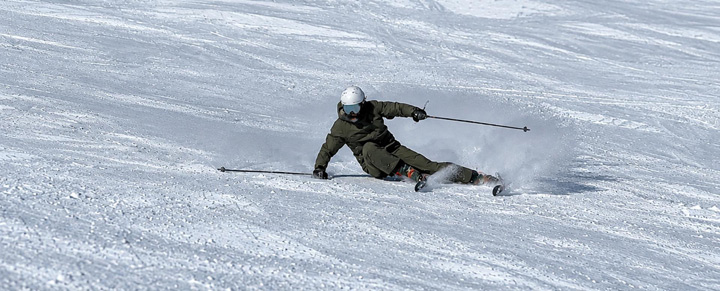
Technical Training in La Thuile
Advanced Levels of Italian Technique
Pietro M. Dalmasso
+33607933550
pietro.dalmasso@monaco.mc
Are you an advanced skier looking for ski lessons and training in La Thuile to improve your level?
In La Thuile I offer an advanced technical programme designed to refine your style and make your skiing fluid, powerful and confident.
Ski lessons and training in La Thuile are delivered by me, as a Ski Instructor and Federal Coach, following the official progression of Italian technique, integrated with advanced coaching methodologies on snow, immediate feedback, detailed video analysis and dry-land exercises. Discover your current level and start your personalised training programme in La Thuile.
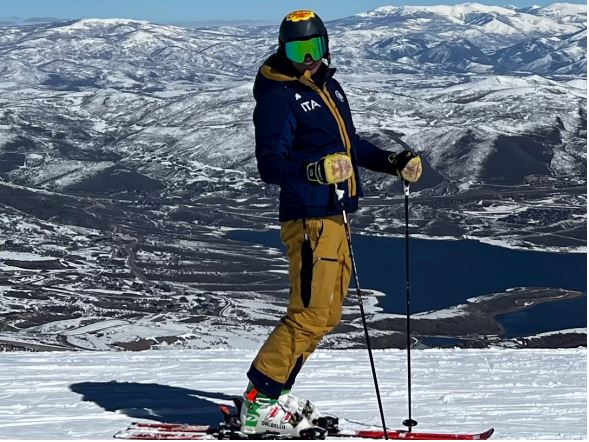
Book Your Ski Lessons in La Thuile - Advanced Technical Training L5, L6, L7
Take Your Skiing to the Next Level
Do you want to improve your
technique, gain greater confidence and get the most from your abilities on
skis?
In La Thuile you can follow an advanced and personalised technical training programme, built around your goals and level.
One-to-one coaching that combines technique, analysis and immediate feedback to make every run a real opportunity for improvement.
What the programme includes?
Real-time coaching with Whisper radio systems, providing immediate feedback and guidance while skiing.
Detailed video analysis, to observe and correct movements precisely.
An integrated method that combines Italian Ski Technique with advanced coaching methodologies.
A programme tailored to your personal goals, whether you want to improve your skiing, build confidence on the slopes, or develop a more efficient and controlled technique.
Preparation for technical exams and selections, as well as race and competition training, with focused exercises to improve precision, consistency, and performance under pressure.
Not just a lesson, but a performance pathway built around you.
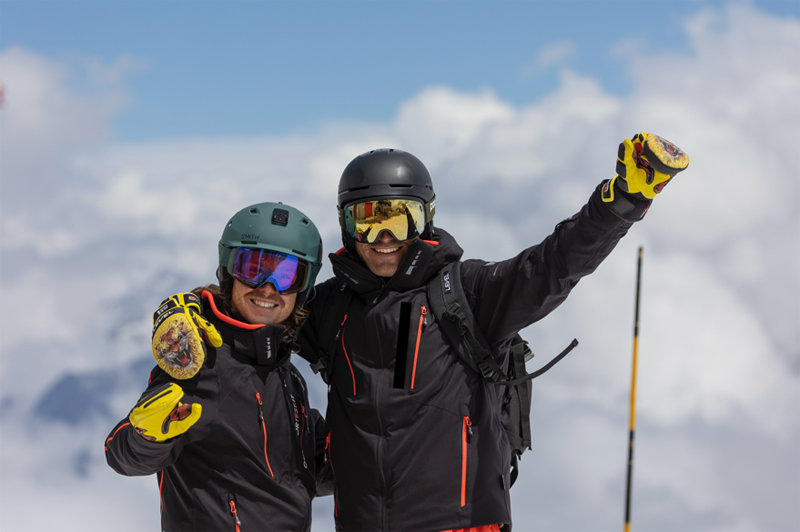
Level L5 - Technical Essence and Fluidity in La Thuile
Skier Profile:
An advanced skier with
solid technical foundations, able to ski
confidently on red and black slopes and adapt to
different terrain, speeds
and snow conditions.
Technical Focus:
* Central position and
stability through the turn
* Pressure management on the
edges
* First clean carved turns without skidding
Training:
On-piste lessons in La Thuile with real-time
corrections, progressive
exercises and video analysis to refine technique. Each run focuses on
micro
technical goals such as sequencing, pressure application and inclination.
Exercise Examples:
* Three-phase turns
emphasising edge grip
* Slow transitions on a medium slope to improve
lateral control
* Guided runs with voice input on key movements.
Final Goal:
A rounded and fluid skiing style, with
excellent command of the red and
black runs of La Thuile, characterised by an effective and precise turn
sequence.
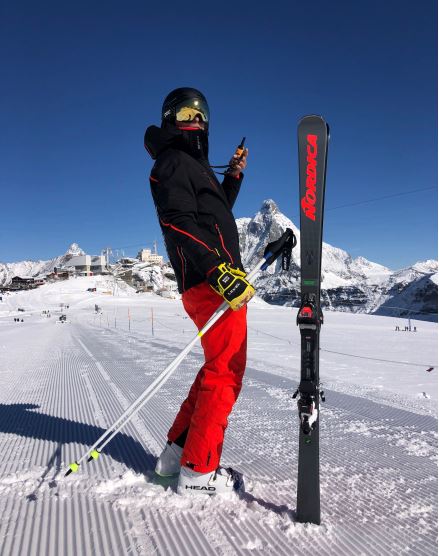
Level L6 - Performance Skiing in La Thuile
Skier Profile:
An expert skier with a
highly developed technical
foundation, able to ski confidently and efficiently on challenging slopes,
varied terrain and different snow conditions. The skier can adapt
speed,
turn shape and technique to the terrain and is ready for more
performance-oriented training.
Technical Focus:
* Refinement of
high-speed carving
* Functional separation of upper
body and pelvis
* Coordination between
technical action and strategic
line
Training:
Ski lessons and training in La Thuile on
mixed terrain,
alternating open sections and technical sections. Use of radio headsets for
audio coaching LIVE and video feedback to optimise posture and
timing.
Exercise Examples:
* Short-radius turns in sequence with variations in
width
* Exercises on transformed snow for dynamic balance
* Slowing down the technical movement to
isolate foot work
* Giant slalom
Final Goal:
Precise, adaptive and natural skiing, able to handle any
change in
terrain in La Thuile with awareness and control.
Level L7 - Expert Skiing in La Thuile
Skier Profile:
An expert skier with
excellent technical mastery, able to ski with
precision, confidence and efficiency across all types of terrain and
snow
conditions. The skier can adapt technique, line, speed and
turn shape to
demanding situations and is ready for high-level technical and performance
training.
Technical Focus:
* Detailed programming of the
technical movement
* Tactical management of
line and
speed
* Optimal control of edge, pressure and
inclinations.
Training:
High-intensity ski lessons and coaching on technical courses in La
Thuile, with slow-motion video, exercises on “turn-entry windows” and
personalised micro-corrections.
Exercise Examples:
* Rhythmic turns on an open course with variations in
timing
* Detailed video analysis focused on trajectory and
push
* Giant slalom simulations on
technical terrain
Final Goal:
To achieve complete technical mastery, combining precision, efficiency,
adaptability and performance to ski confidently and
dynamically in any
terrain and snow conditions.
Powerful, strategic and refined skiing,
designed for professional exams, races and selections.
Becoming a Ski Instructor in the Aosta Valley - Requirements and Pathways
How do you become a ski instructor in the Aosta Valley?
The pathway to obtaining professional qualification is regulated by the Region and involves several stages. The first real step is the technical-aptitude selection, a genuine qualifying test that allows access to the subsequent training pathway. And this is precisely where many aspiring instructors stop.
What Does the Selection Involve?
The technical-aptitude selection is one of the most difficult stages of the entire pathway. It is not enough to be an excellent skier: you must demonstrate a very high technical level, speed, precision, control and sufficiently complete skiing to be able to undertake the subsequent professional training pathway.
The selection takes place over three days of tests, with a fourth day scheduled as a reserve in case conditions do not allow the tests to take place normally.
The Timed Giant Slalom: The Qualifying Test
The first day is dedicated to the timed giant slalom and is the first
major selection. The candidate must complete the course correctly and remain
within a specified time parameter relative to the reference time established
for the test.
The reference time is established through the benchmark skiers, athletes with an extremely high technical level, selected for their abilities and specific training, often with a significant competitive background, including at the highest international levels. The margin provided for by the regulations is then applied to that reference time: 19% for men and 25% for women.
In other words, the candidate must complete the test within the established limit to pass this first qualifying stage. It is not enough to know giant-slalom technique: you must be able to carve the skis, maintain the line, manage speed and tackle the course effectively, without losing control as speeds increase.
It is a genuine qualifying test, and for many candidates this is precisely where the pathway ends.
After the Giant Slalom: Arcs and Open Terrain
Once the giant slalom has been passed, you move on to the
second part of
the selection, where the type of assessment changes completely. There is no
longer only the stopwatch: there are the eyes of the
committee.
In the following days the candidate is assessed in open-terrain skiing and in the execution of the different turn arcs. Balance, centrality, carving, coordination, dynamics, rhythm, speed control and the ability to adapt skiing to different situations are observed.
The tests allow the committee to assess not only the ability to execute a turn, but the overall quality of the skiing. The selection is therefore designed to assess two different aspects: first, the ability to ski fast and effectively, then the ability to ski technically well and demonstrate mastery of the skis.
They are not simply looking for someone who can go fast. They are looking for someone who can ski well.
After the Selection
Once the selection has been passed, the real training pathway begins. The
training course lasts approximately two years and consists of at least
90
actual training days, divided between technical, teaching and
theoretical-cultural modules.
The training includes ski technique, teaching methodology, teaching progression, safety, snow science, self-rescue and knowledge of the mountain environment, foreign languages. An important part also concerns teaching children, adults and people with disabilities, as well as the different disciplines and situations an instructor may encounter during their work.
Knowing how to make a turn does not automatically mean knowing how to explain it: an instructor must be able to observe, analyse, demonstrate and correct.
Technique, Safety and Responsibility
An instructor’s preparation is not limited to the piste. The pathway also
includes training in safety and the management of situations in the
mountains, including self-rescue.
The instructor must know their own limits, those of their students and the characteristics of the environment in which they work. Technique is fundamental, but responsibility is equally important.
Exams and Professional Qualification
At the end of the training, the tests required to obtain professional
qualification are held. The assessments cover technique, teaching,
theoretical and language preparation, together with safety-related aspects.
Once the exams have been passed, the professional pathway continues with a practical period at a ski school, before regular registration in the professional register. From that moment, skiing officially becomes a profession.
It Is Not Enough to Be a Good Skier
This is perhaps the most important difference: an excellent skier knows
their own movement, while a good instructor must learn to see the movement
of others.
They must understand why a skier loses balance, why a turn does not work, when to intervene and, above all, how to explain a solution simply and clearly. This is where technique becomes teaching, and this is where a true ski instructor is born.
Do You Want to Become a Ski Instructor?
If you love the mountains, want to continually improve your technique and feel the desire to pass on what you know to others, the path to becoming a ski instructor can be one of the most complete professional experiences that skiing can offer.
A True Story of Work, Failure and Starting Again at 21
From an Initial Failure to Becoming a Ski Instructor
He was 21, Italian and living in Milan. He wanted to become a ski instructor, but he was starting from a particular situation: he had not had an athletic training background as a child and had never been part of a ski club during childhood. He had started building his skiing pathway later, as an adult.
When we met, I was very clear with him: his starting point was not ideal for aiming at such an ambitious goal. This did not mean it was impossible, but it would require a lot of work, time, patience and, above all, the awareness that the journey could be difficult.
From the beginning I also told him something else: on a journey like this, you have to be ready to live with days of great euphoria and others of great discouragement. When you work for months in search of the best physical condition, technique and perfect athletic movement, selection inevitably becomes something very personal and failure can hurt.
The First Year
During the first year we worked on several fronts, not only on ski
technique and technical-tactical preparation for giant slalom and the
selection tests, but also on dry-land athletic preparation and physical work
during periods away from the snow.
The goal was to build a more complete athlete, working on strength, endurance, mobility, coordination and the ability to maintain technical quality even under fatigue, but above all on consistency. Preparation could not be limited to the winter months: it had to become a pathway capable of continuing throughout the year.
Then selection day arrived and the giant slalom did not go as we had hoped. He did not pass the qualifying stage. Everything he had worked for over months suddenly seemed to lose its meaning.
This is one of the most delicate moments for anyone facing a selection at this level. After a failure can come the desire to give up everything, tiredness, anger and even rejection of skiing. After months spent seeking the best physical condition and the most effective technical movement, it is easy to ask whether it is still worth it. At that moment the work was no longer only technical: it had also become psychological.
Do Not Start from Zero. Start Again from Experience
We decided not to consider that result the end of the journey. It was a
failure, certainly, but it could also become a different starting
point.
In the second year we continued working together, staying in contact even during periods away from the snow. I was in the Principality of Monaco, he was in Milan. The distance did not prevent me from following him; on the contrary, it forced us to build a relationship based on continuity and trust.
We discussed preparation, training, goals and everyday life, because at 21 there is more to life than skiing. There are university, friends, relationships and the normal needs of a young man of that age. These aspects are also part of the balance needed to tackle such a demanding goal.
My task was not to ask him to live only for skiing, but to help him build a life in which skiing could find the right place.
The Second Year
We worked again on technique, race tactics and the ability to tackle the
selection tests. We continued athletic preparation throughout the year,
trying to reach winter in stronger and, above all, more specific physical
condition.
The most important difference, however, was in his mind. He had already experienced the selection, knew what it meant to stand at the giant-slalom start gate, knew the feeling of seeing his goal move away in a few seconds and had learned what it meant to start again.
In the second year we were no longer searching for perfection, but for awareness.
The Second Selection
When he returned to the giant-slalom
starting line, he was no longer the
same young man as the previous year. He had more experience, more
preparation and, above all, he had already faced the fear of failure. This
time he passed the qualifying stage. Then came the subsequent tests: the
turn arcs, open terrain and technical assessment. One test after another,
until the selection was complete. This time he had done it.
But the journey was not over yet. After the selection, the two-year training course began, during which we continued to work together. The following year came the final test: he passed that too and became a Ski Instructor.
The Most Important Lesson
When I think back on this journey, I do not consider the final result the
most important part. The most important thing is everything that happened
before: a young man starting from a less-thanideal technical base, a first
year of preparation, a failure, the desire to give up, the ability to
regain
motivation, a second and even more intense year and finally the result.
This is why, when I work with someone who wants to become a ski instructor, I try to be very clear from the beginning. I do not promise that it will be easy and I do not promise that the result will come. I can, however, provide experience, method, preparation and support throughout the entire journey.
Becoming a ski instructor does not simply mean learning to ski better. It means learning to manage pressure, accept mistakes, get back up after a defeat and keep working when the result still seems far away.


